Rawuser · Privacy-zero personalization
The page that readswhy they came.
Rawuser serves each visitor the version of your page written for their intent. Never their identity. One snippet, thirty versions, zero cookies.
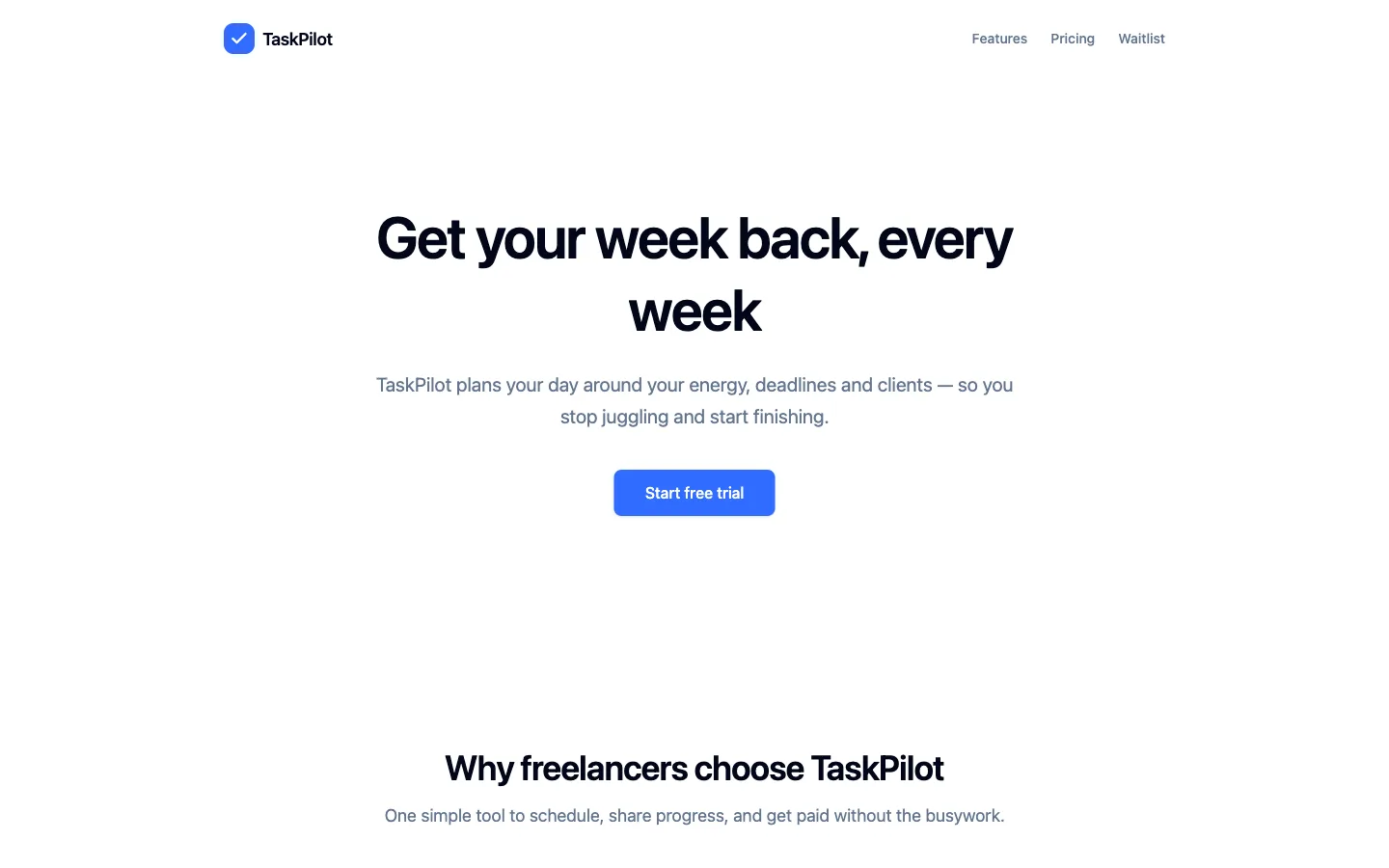
Direct visitor · sees the page as built
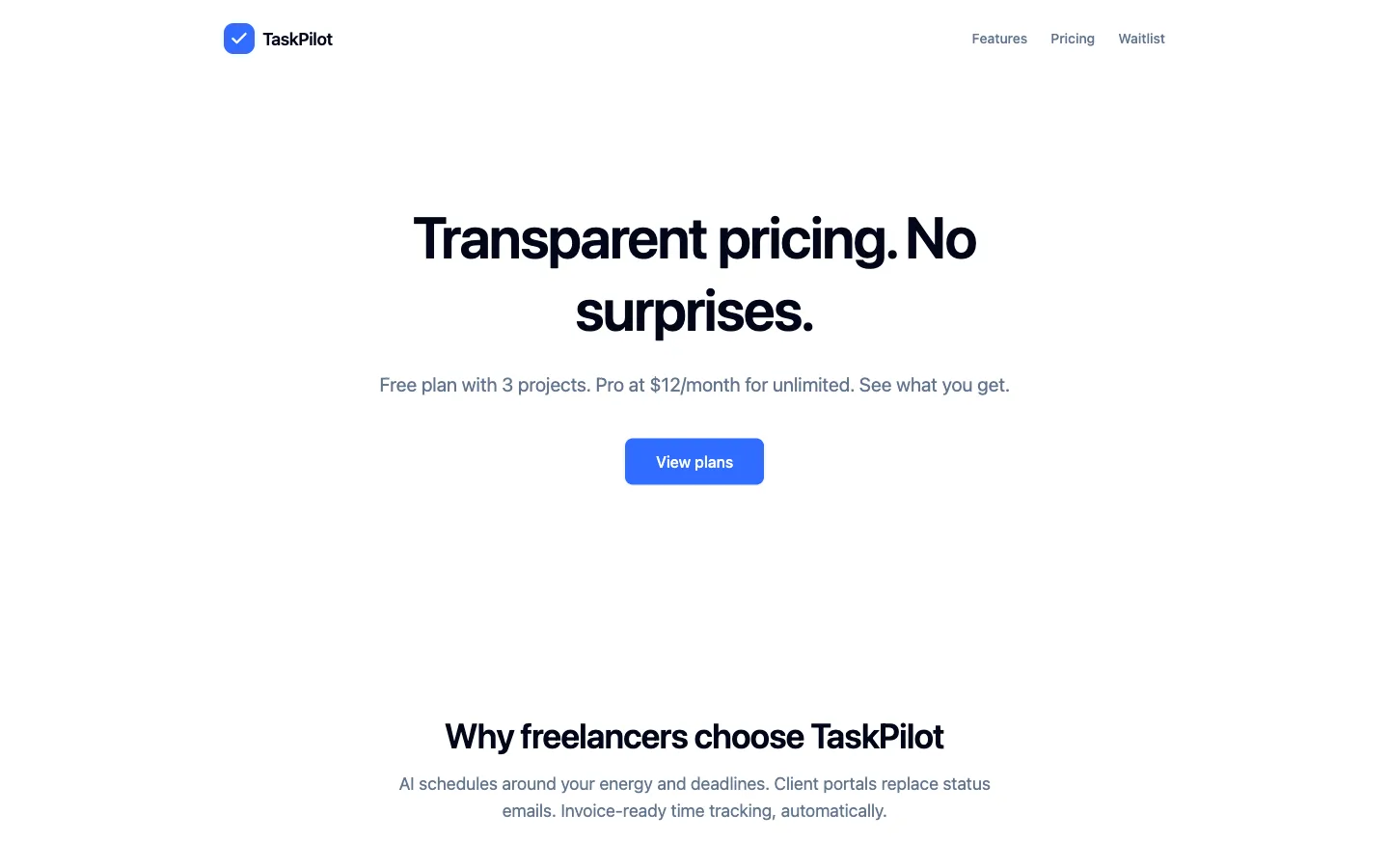
Paid pricing-intent visitor · same page, rewritten
Same URL. Two visitors.
One snippet did this. No code changes, no A/B setup, no cookies. A real site built with Lovable, running Rawuser in production right now.
● Crawlers and AI bots always receive the original page. Personalization is for people, so search and AI answers stay canonical.
The mechanism, not a black box
How it works.
01 · Signals
Signals, not surveillance.
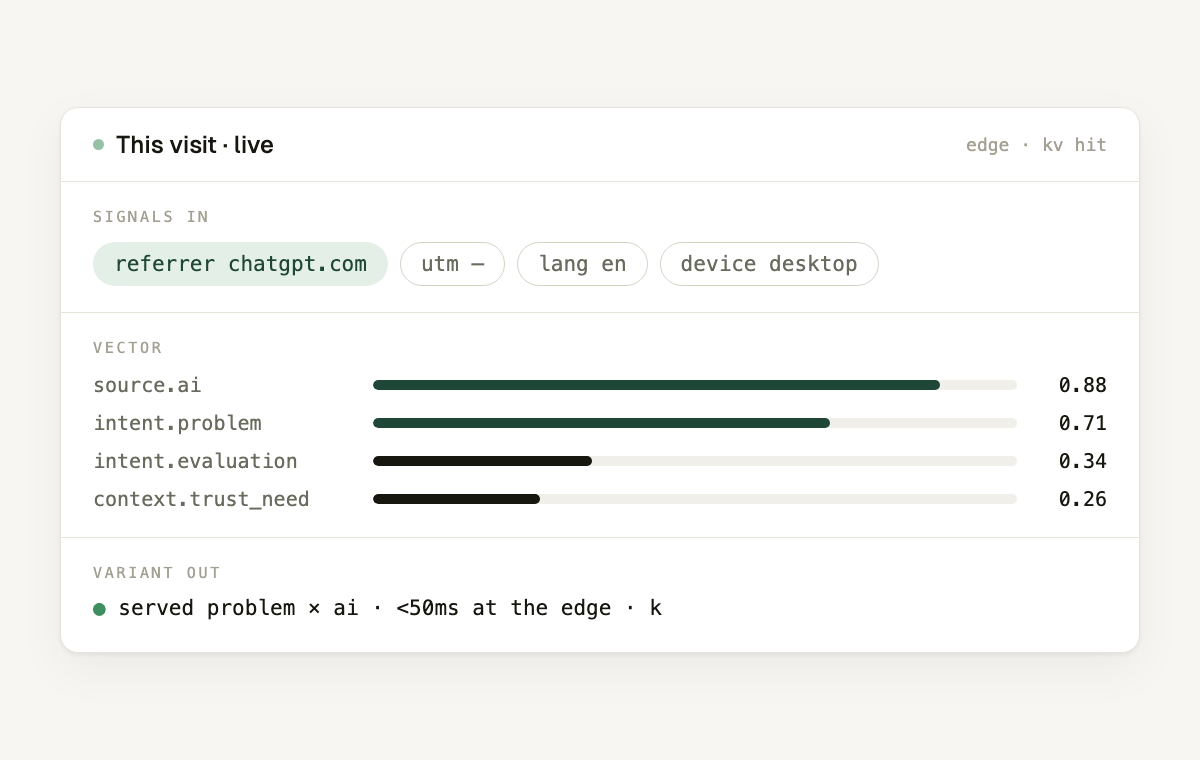
UTM, referrer host, entry path, language, country, device class, AI-source. Ambient data the visit already discloses. Never cookies, never fingerprints, never a stored ID. The classifier on the right is the same code the edge runs, executing in your browser right now. Type into it.
02 · Vector
Every visit becomes arithmetic.
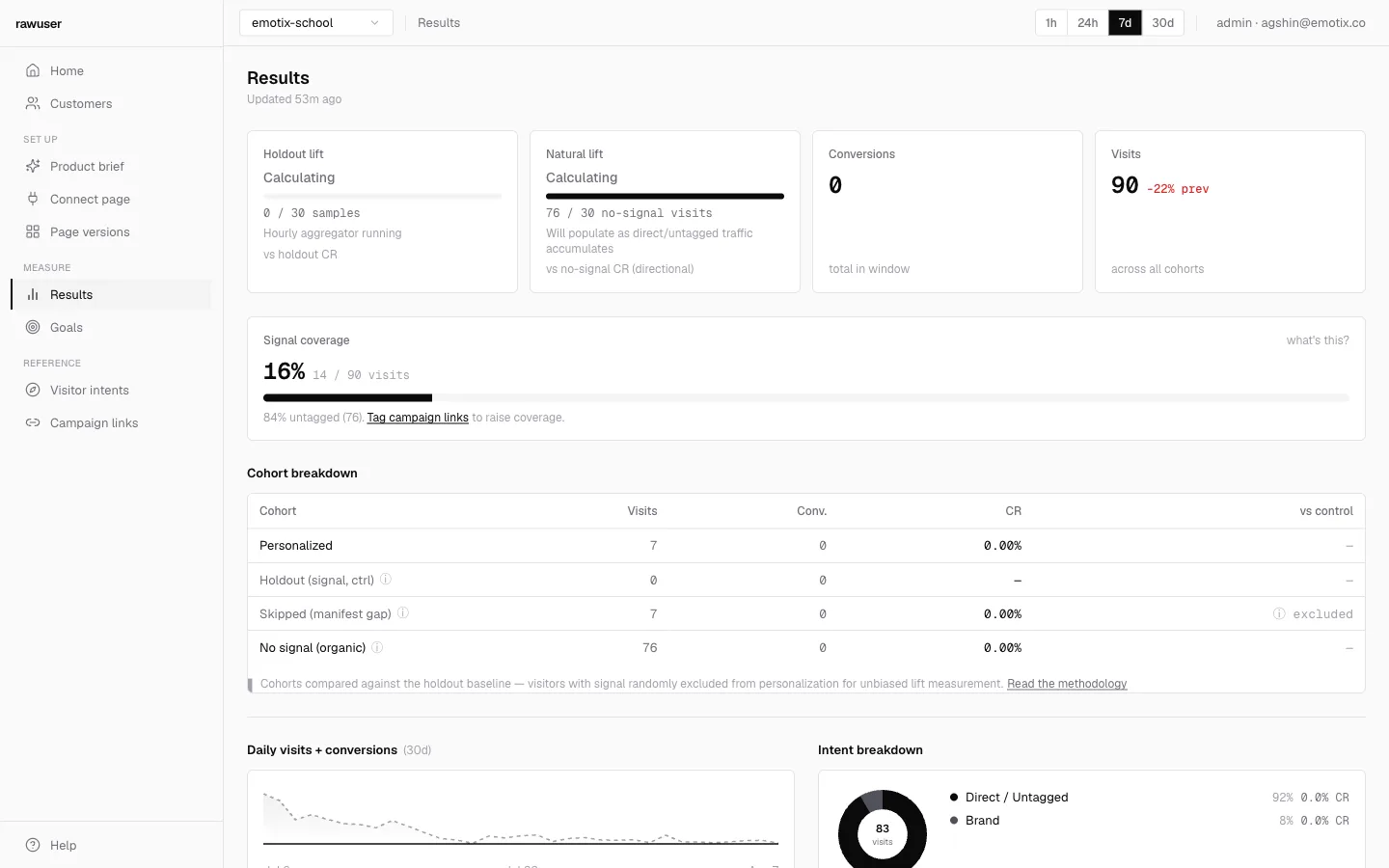
A 20-dimension intent vector across intent, source and context. Several dimensions can be high at once; the source never overrides the intent. No segment guessing, no black-box scores. You can read every number in the dashboard.
03 · Variant
The version they needed, instantly.
The edge snaps to the dominant pair and reads a pre-written version from cache in under 50ms. The snippet swaps only the marked elements. Generation happened offline, before they arrived; there is no LLM in the visitor path, no flicker, no layout shift.
The operator side
Run it from one screen.
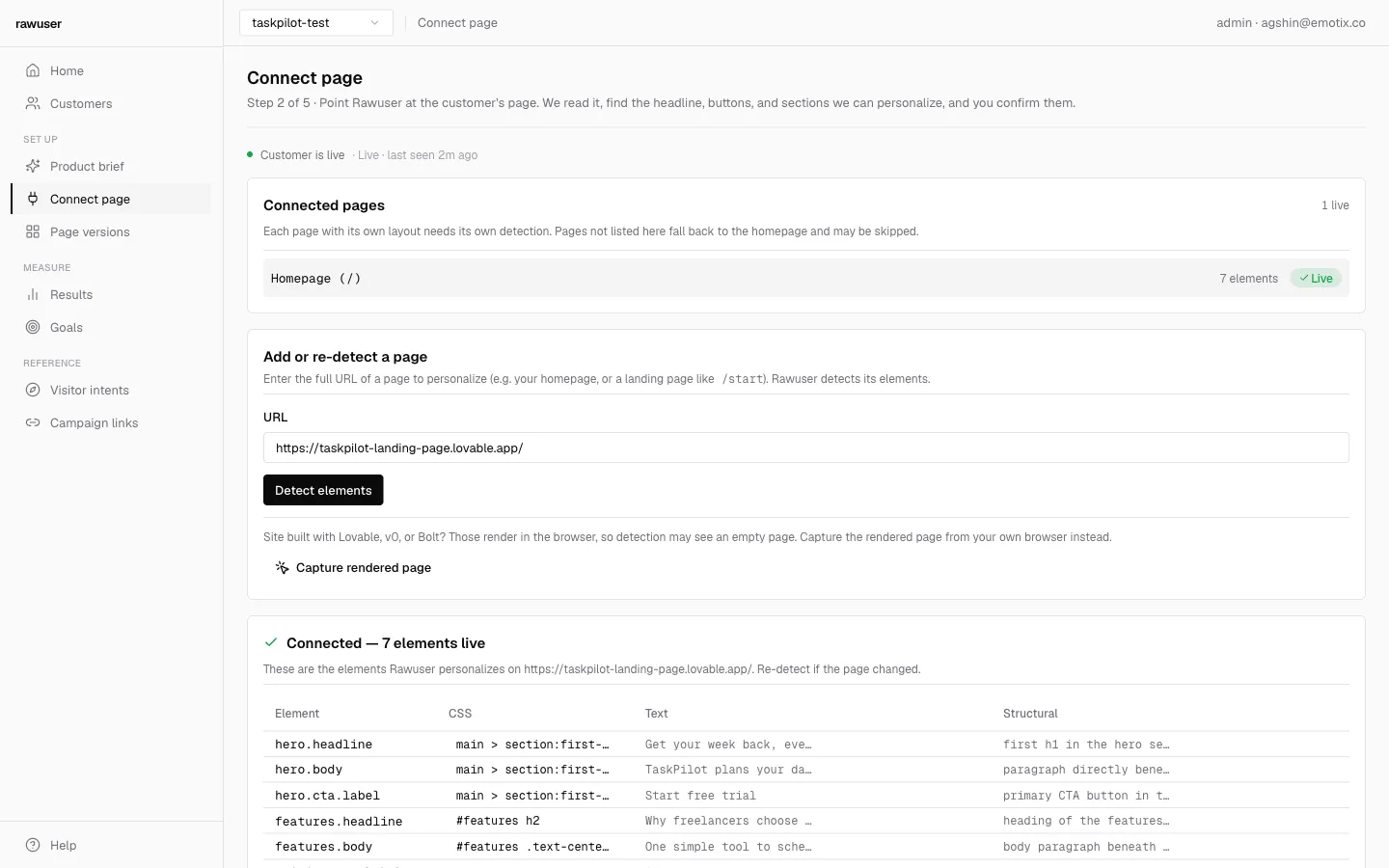
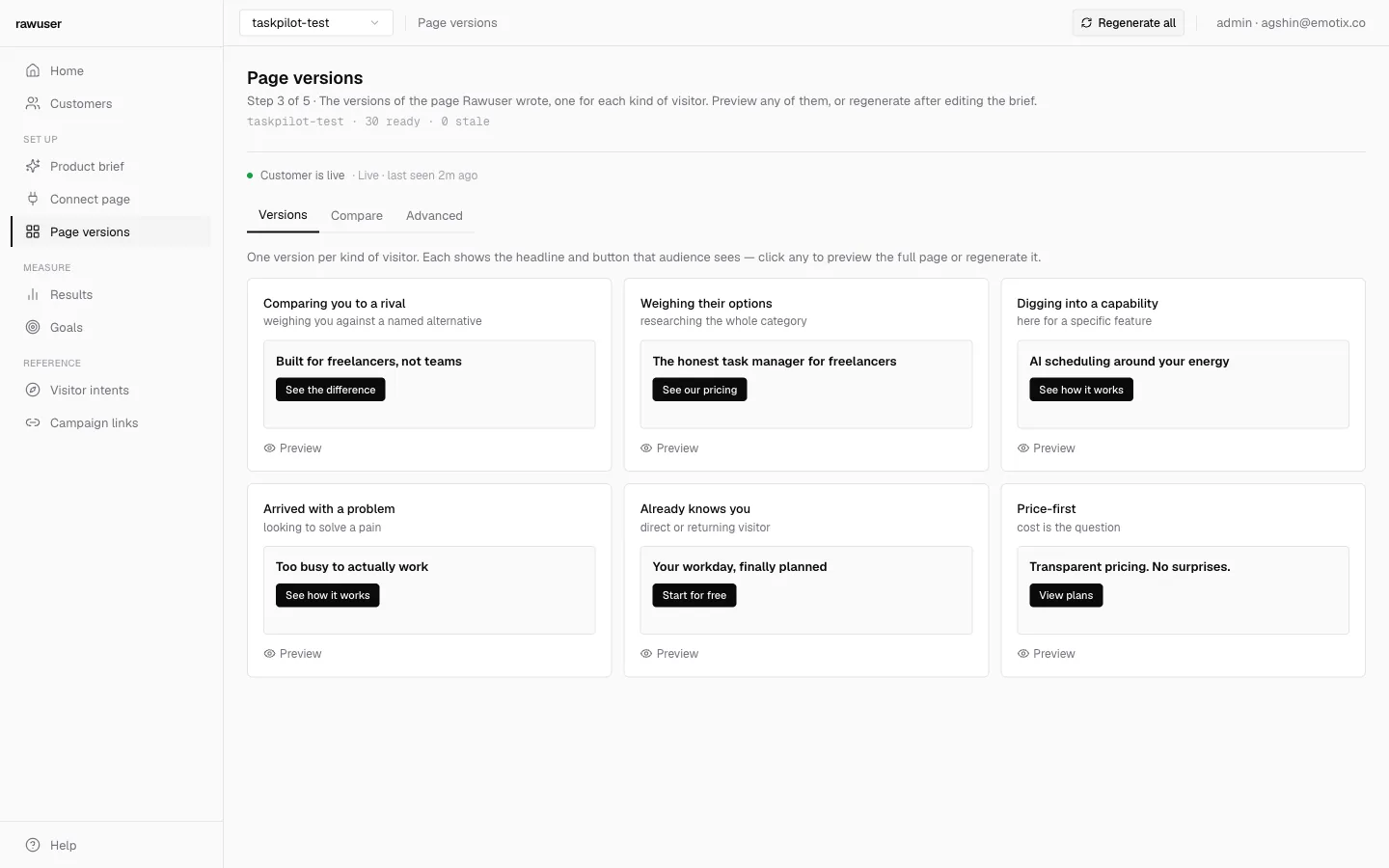
Paste a URL. AI finds the headline, buttons and sections worth personalizing; sites built with Lovable or v0 get a one-click rendered-page capture. You review every selector before anything ships.
Compared honestly, not trashed
How Rawuser compares.
Identity-first personalization
Built on cookie + IP reverse lookup to identify who's visiting. Hit by GDPR + ePrivacy enforcement; Mutiny pivoted away from website personalization in 2025. Identity-based personalization is a regulatory liability now.
How Rawuser differs →Identity-first enrichment
Anonymous-visitor reverse lookup is expensive per visit, frequently wrong, and depends on third-party data brokers. Same regulatory ceiling, same identity-first architecture, same path.
How Rawuser differs →Manual variant authoring
Hand-instrumenting variants in Optimizely / VWO / homegrown tools doesn't scale past two or three. The vector approach generates 30 versions per page at about $0.45, and you author the brief once.
How Rawuser differs →Built on two moats
Two things that aren’t copyable.
I
Cookies are not disabled here. They are never set.
Nothing outlives the tab: two labels and a random visit marker, gone when it closes. No cookie, no profile, nothing that follows anyone. That is an architecture, not a policy, and it is why GDPR and ePrivacy stop being a project.
What the visit tells us
What we never touch
II
Design-grade output
The strongest model where it matters.
Brand, problem, and competitor versions get Claude Sonnet 4.6. The other three intents get Haiku 4.5. That split is a documented decision, not a coin flip.
A design system per surface, never a template.
Default AI-tool aesthetics never ship. This page, the dashboard, and every generated version run deliberate, documented systems. If it looks like a template, it doesn't merge.
Structure changes, not just sentences.
Different intents get different section compositions. A competitor visitor gets a comparison table first; a problem visitor gets validation before any product mention. The structure is the personalization.

Who’s behind this
Pilots are founder-run. When you book one, you’re talking to me.
Agshin Rajabov: sixteen years in UX, formerly at Electronic Arts and Deutsche Bank, teacher to 400+ designers at Emotix School. Design-grade output isn’t a marketing line here; it’s the personal bar every generated version has to clear.
Start your pilot
See it on your site.
We’ll generate the versions we’d ship for your exact ICP, on your real page. About $0.45 in API cost. Two-day turnaround.